FRETBOARD MAGIC: THE MAJOR-MINOR TRIANGLE
Blend Major & Minor Blues Guitar Without Thinking!
Stop sounding stuck in minor pentatonic boxes and start playing blues guitar that sounds sweet, gritty, and advanced — using one simple fretboard pattern.
If you’ve ever thought:
“I know my pentatonic boxes, but my solos still sound stiff…”
“How do players like B.B. King, Clapton, or SRV mix major and minor so effortlessly?”
“I want that sweeter, more expressive blues sound — but theory just fries my brain…”
You’re in the right place.
The Truth Most Guitar Lessons Never Tell You
Great blues and rock guitarists aren’t thinking in scales when they play.
They’re using visual landmarks on the fretboard — shapes that naturally blend major and minor sounds without overthinking. One of the most powerful of those landmarks is a simple, repeatable triangle pattern that shows up all over the neck.
And once you see it…
You can’t unsee it.
Introducing - Fretboard Magic: The Major–Minor Triangle
A focused, no-fluff guitar course that shows you how to:
Instantly blend major and minor blues sounds
Break out of the minor pentatonic box
Sound more advanced without memorizing theory
Move across the neck with confidence
Play sweeter, more expressive blues & rock licks
All using one simple triangle pattern you can apply in any key.
Why Blending Major & Minor Matters:
Most blues and rock guitarists start with the minor pentatonic — and stay there forever.
That’s why their playing: Sounds dark or harsh, lacks contrast or feels boxed in.
When you start blending major and minor: Your playing becomes sweeter and grittier
Solos feel more musical
You sound instantly more “pro”
This is the difference between Albert King’s raw bite and B.B. King’s smooth, vocal tone
The magic is knowing when and where to use each sound.
The “Miracle Triangle” Shortcut
Instead of memorizing:
5 pentatonic boxes
Major scale theory
Complicated fretboard maps
You’ll learn to spot a triangle shape on the top 3 strings that:
Exists in every pentatonic position
Naturally produces major or minor sounds
Acts as a roadmap across the neck
Move the triangle → change the sound.
It’s that simple!
It all starts by mastering these skills. I will show you exactly what you need to focus on to become a better guitar player.
Fretboard Magic: The Major-Minor Triangle
Course Description
🎯 Module 1 – Why Most Blues Guitarists Sound Stuck
The minor pentatonic trap
Why “advanced” players sound freer with the same notes
Major vs minor: the real sound difference
🎯 Module 2 – The Major–Minor Triangle Explained
The triangle pattern (the miracle shape)
How to hear major vs minor instantly
Why this works without theory or memorization
🎯 Module 3 – The Four Triangle Positions
Triangle Position 1 – Major sound
Triangle Position 2 – Minor sound
Triangle Position 3 – The B.B. King box
Triangle Position 4 – Upper minor position
You’ll know exactly where you are on the neck at all times.
🎯 Module 4 – Blending Major & Minor Without Thinking
Jumping between triangles naturally
Avoiding scale-run solos
Using your ear instead of your brain
🎯 Module 5 – Musical Application
Using the triangle over a 1-4-5 blues
Blues, rock, funk & country examples
Common mistakes that kill the sound
🎯 Module 6 – Expanding the Triangle
Filling out the triangle with surrounding notes
How this connects to full fretboard freedom
Where to go next if you want to go deeper
Bonus
Play-along blues backing tracks
Practice tips for applying this in any key
Meet Your Instructor
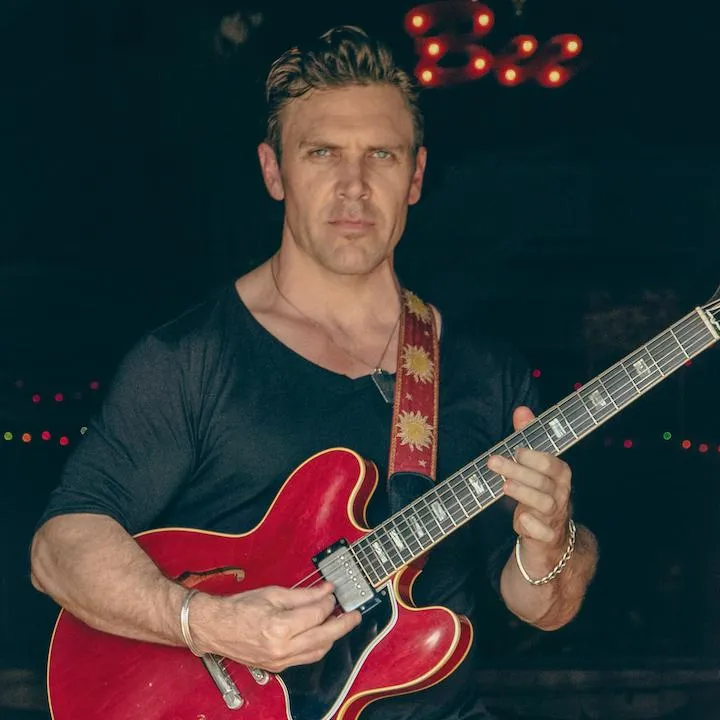
My name is Jake Andrews and I've been playing guitar seriously since I was 6 years old, starting out my professional career the night I sat in with Albert King at the age of 8 at Antone's in Austin, TX.
I had the great fortune of growing up in the rich music scene here in Austin. My father, John "Toad" Andrews, was the guitarist with the roots/rock band Mother Earth in the 60's and 70's. He he would take me out countless nights as a kid to sit in with and learn directly from the many legends that would often perform here-Buddy Guy, Albert Collins, Jimmie Vaughan, BB King, Albert King, Otis Rush, Johnny Winter and Austin musicians such as Doyle Bramhall (Eric Clapton), Charlie Sexton (Bob Dylan, Elvis Costello), Ian Moore, Eric Johnson, and so many more.
By the time I was in my teens I had toured in Europe, was working on recording my first album, and was regularly touring the US, often playing in LA and Memphis at BB King's clubs. My debut album at age 19 on a Warner Brothers subsidiary scored a Top Ten Rock Radio hit with "Time To Burn". Billboard Magazine stated, “Time to Burn’s mix of guitar pyrotechnics, fiery vocals and powerful new songs confirms that Jake Andrews is already blazing new paths with the torch he’s been passed.”
I was named “Breakout Rock Group” in 1999 by R&R (Radio and Records) Magazine. The record was supported with national tours with artists including the Allman Brothers, The Doobie Brothers, Susan Tedeschi, Boz Scaggs and George Thorogood. I've since released five more solo albums, my latest "Train Back Home" debuting #11 on the Billboard Blues Chart in July 2023. I played Eric Clapton's prestigious music festival in 2023. I've toured Europe, the US and continue to record in Austin and LA. I've also lent my guitar playing to many recordings by other artists.
In addition to being a working and touring music artist, I have been teaching private guitar lessons with select students for nearly 20 years. I REALLY enjoy working with my students, helping them develop their musical ear, their timing and especially their own improvising skills! To see my students grow and develop brings me an enormous amount of satisfaction. I believe my many years of being a professional music artist AND of teaching bring a unique perspective to my guitar courses which sets me apart from the many other teaching courses out there. Now I want to help YOU to become the greatest Blues/Rock Guitarist you can possibly be!
Frequently Asked Questions
Who is this course for?
This course is perfect if you:
Know your basic pentatonic shapes.
Play blues, rock, funk, or country.
Feel stuck sounding the same.
Want results today, not in six months.
Prefer practical shortcuts over heavy theory.
How long do I have access to the program & when does it start?
You will have full access to the course from the moment of purchase.
Who Is This Course Not For?
Absolute beginners who don’t know pentatonic shapes yet.
Players looking for deep academic theory.
Jazz-only improvisation.
This is about feel, sound, and musical results.
Will this help me?
This is laser-focused solution to one of the biggest problems blues guitarists face.
One idea.
One pattern.
Big results.
